Categories
Events News

OSCRAT – Supporting European SMEs in Enhancing Cyber Resilience


Łukasiewicz – AI: Expertise in Cybersecurity and Artificial Intelligence

The Łukasiewicz Research Network – Institute of Artificial Intelligence and Cybersecurity (Łukasiewicz – AI) conducts projects with a real impact on digital security. We carry out research, develop tools, and support businesses in increasing their resilience to cyber threats. Our activities help make products and systems across Europe more secure and resistant to attacks.

The OSCRAT Project in Practice

Since 2024, Łukasiewicz – AI has been participating in the international OSCRAT project (Open-Source Cyber Resilience Act Tools), co-funded by the European Union under the Digital Europe Programme. The project aims to develop open, free tools to assist small and medium-sized enterprises (SMEs) in implementing the requirements of the Cyber Resilience Act (CRA) in practice.

The project focuses on increasing the real-world resilience of digital products throughout their entire lifecycle — from design and deployment to incident response.

Activities So Far

Throughout the project, the Łukasiewicz – AI team has presented the OSCRAT tool at numerous international conferences and meetings to gather feedback. A survey was also conducted among SMEs to collect opinions and needs, ensuring that the platform aligns with actual market challenges.
(See information about the OSCRAT survey)

What OSCRAT Offers

  • CRA Self-Assessment – interactive checklists, role and product category assignments, and reports supporting EU compliance declarations.
  • SBOM and Supply Chain Security – automatic and manual component lists with vulnerability analysis.
  • Vulnerability and Incident Management – policy creation, reporting to ENISA and CSIRT teams, improving response capabilities.
  • Centralized Documentation Repository – all reports, policies, certificates, and security patches in one location.
  • SME Support – ready-to-use tools and guidelines for quickly implementing cyber resilience principles without building solutions from scratch.

OSCRAT in the European Context

The project is aligned with the CRA, which defines digital product security requirements throughout their lifecycle. OSCRAT fits into the EU’s broader strategy to strengthen digital security and enhance enterprise resilience against cyber threats.

Collaboration and Consultations

OSCRAT is implemented by an international consortium: PMF Research (Italy), Oves Enterprise and ENERSEC (Romania), EDIH Trakia (Bulgaria), Unicis.Tech OÜ (Estonia), and Łukasiewicz – AI (Poland).

Consultations and surveys of SMEs, experts, and business support centers ensure the tools are tailored to real market needs.

Role of Łukasiewicz – AI

As the leader of the WP2 Requirements Gathering and Analysis work package, Łukasiewicz – AI defines the scope and requirements for OSCRAT tools, develops interaction models, the graphical user interface, and cybersecurity specifications.

Summary

OSCRAT provides practical, open support for European SMEs in enhancing the cyber resilience of digital products and preparing for CRA requirements. The platform enables enterprises to efficiently implement digital security principles in their daily operations.

Categories
Events News

CTI-AI: AI-Based Cyber Threat Detection

In a world where cyber threats are becoming increasingly complex, rapid and effective response is crucial for protecting critical infrastructure and digital security.

Since January 2025, Łukasiewicz – AI has been implementing the CTI-AI project – AI-led Cyber Threat Intelligence (CTI) for Security Operations Centers and National Cyber Security, funded by the European Union under the Digital Europe Programme.

The project aims to optimize the scalability of cybersecurity resources and enhance the operational maturity of Security Operations Centers (SOC) and threat analysis (CTI) through the use of artificial intelligence technologies. CTI-AI supports the implementation of AI in national SOCs, protects critical infrastructure, and strengthens national cybersecurity frameworks.

The project is carried out in a consortium with the following partners: Łukasiewicz EMAG (Poland), EclecticIQ (Netherlands), and NRD Cyber Security (Lithuania). Project activities are guided by the End-User Advisory Board, which includes representatives from national cybersecurity centers in countries such as Lithuania and Iceland. The consortium delivers solutions tailored to the needs of a wide range of users across the European Union, considering national security, defense, and the protection of critical infrastructure.

As part of the project, an AI-powered Threat Intelligence platform is being developed, giving participants access to AI tools and best practices in threat analysis. The project enhances the scalability and efficiency of CTI operations, improving threat detection, information sharing, and incident response in national SOCs, the National Cybersecurity Center, and the broader European industry and public administration.

CTI-AI integrates knowledge and expertise from research, industry, and operational sectors. By publishing best practices and providing access to proven tools and solutions, the project supports the implementation of EU cybersecurity policies and strengthens the digital resilience of the European ecosystem.

To date, project activities have included presentations and participation of Łukasiewicz – AI experts in international conferences such as AIBA and The H@ck Summit, enabling progress reporting and knowledge exchange with other European cybersecurity stakeholders.

Project partners:

  • Łukasiewicz – AI – Project coordinator,
  • EclecticIQ (Netherlands)
  • NRD Cyber Security (Lithuania)

The CTI-AI project is funded by the European Union and contributes to enhancing cybersecurity and digital resilience across Europe.

Categories
News Successes

Summary of Stage I of the “Accessible Book” Project

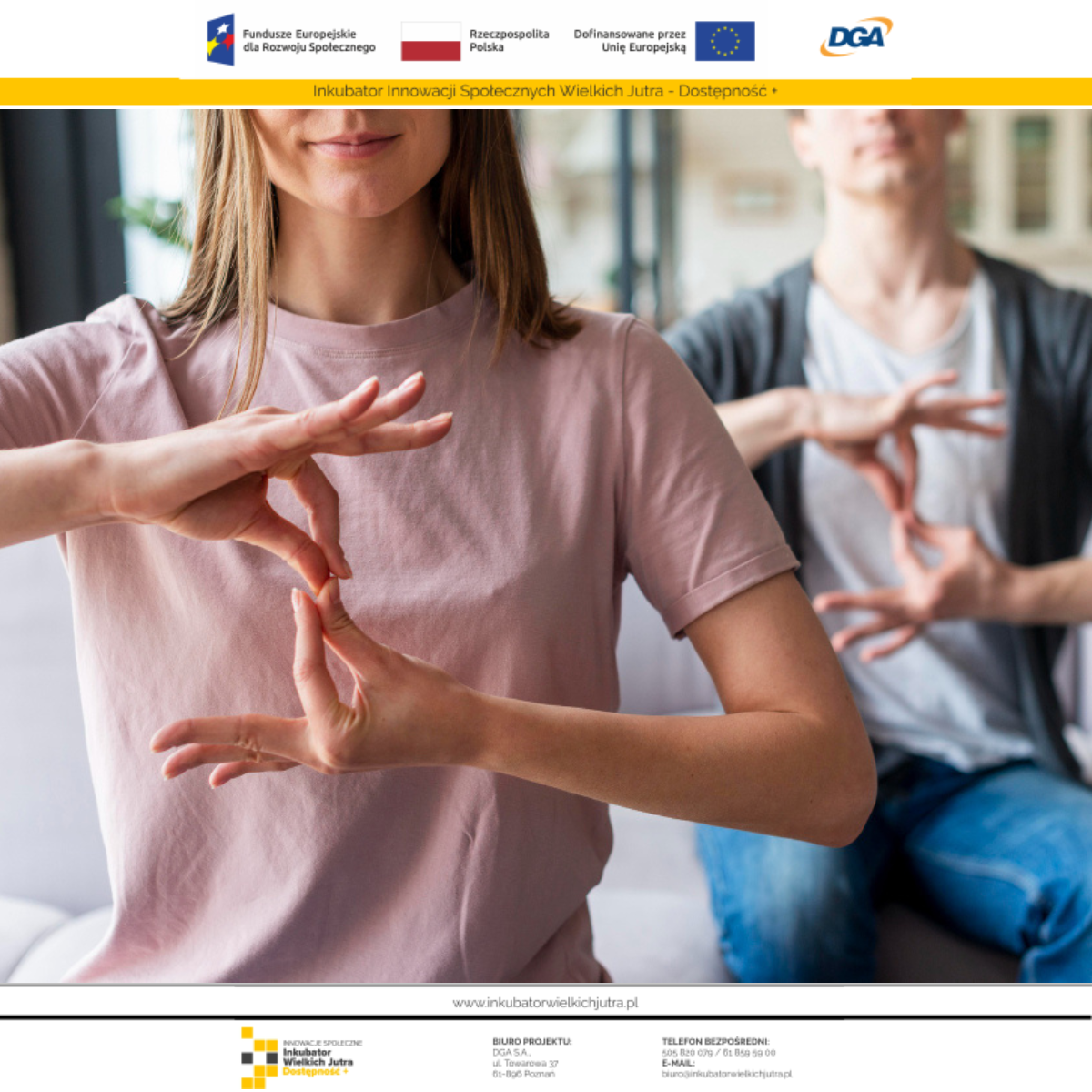
Literature is often described as a window to the world. For many Deaf people, however, this window remained closed for years—not due to a lack of interest in culture, but because of language barriers. The “Accessible Book” project was created to gradually remove these barriers and open access to literature in a form aligned with the natural mode of communication of Deaf people.

In January 2026, the first stage of the project was completed. Its goal was to create accessible, multimedia adaptations of books and to establish organizational and substantive foundations for the further development of the initiative.

Accessibility Based on Polish Sign Language (PJM)

For people whose natural language and primary means of communication from birth is Polish Sign Language (PJM), traditional forms of access to literature—based solely on written text—do not provide full accessibility. PJM is a distinct visual-spatial language with its own grammar and structure. As a result, written Polish is a second language for Deaf users, and in some cases may even function as a foreign language acquired through education.

Within the “Accessible Book” project, it was assumed that translation into Polish Sign Language would be the primary channel of communication. Other layers—textual and audio—serve a complementary role, broadening the audience and enabling the project to be used by hard-of-hearing and hearing individuals, as well as educational institutions. This approach resulted in the creation of a multimedia publication format known as a sign-language book (migoksiążka), combining PJM translation, synchronized text, a supportive audio layer, and visual design.

A Library Accessible to Diverse Audiences

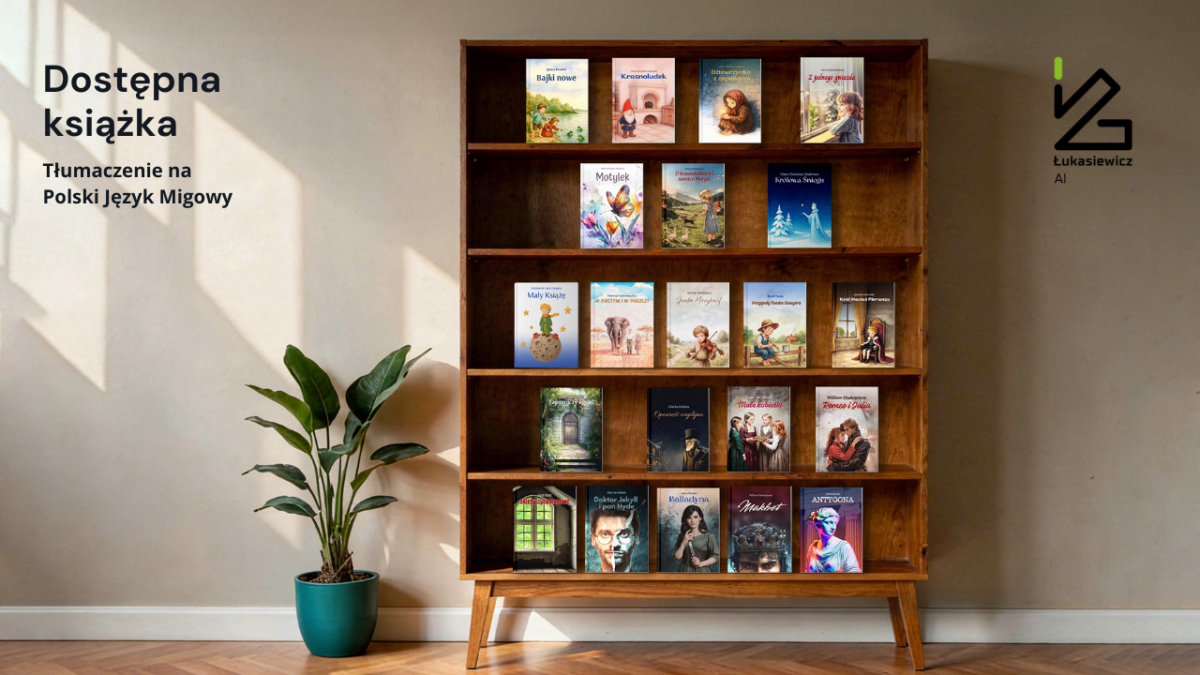
As part of the first stage of the project, 22 literary works were developed and made available. The digital library includes classic fairy tales and children’s stories, school reading materials, and works of fiction intended for young people and adults.
The available titles include works by authors such as Hans Christian Andersen, Antoine de Saint-Exupéry, Juliusz Słowacki, Henryk Sienkiewicz, Bruno Schulz, William Shakespeare, and Janusz Korczak. The selection aimed to ensure thematic, linguistic, and emotional diversity so that people of different ages and needs could benefit from the project’s resources.

The materials were published in a dedicated online library available at https://dostepnaksiazka.pl, which serves as the central platform for the project, as well as on a publicly accessible YouTube channel (https://www.youtube.com/@LukasiewiczAI), enabling broad and free access to the content.

Implementation and Scale of Work

Production took place in a specially prepared recording studio at Łukasiewicz – AI. The project involved nine professional Polish Sign Language interpreters—both Deaf and hearing—who have experience working with literature and education. Each interpreter brought a unique style and mode of interpretation, a diversity that is essential both for better reception by PJM users and for creating valuable, varied material for machine learning.
In total, 95 hours of video recordings were produced, not including the time required for post-production, layer synchronization, and preparation of the publications for release. The scale of this work demonstrates how time- and resource-intensive the manual creation of high-quality accessible literary content is. At the same time, the collected materials form the beginning of a structured resource that may be used in future research and development activities.

The first stage of the project was primarily production-oriented and pilot-based. The resulting recordings and textual materials initiated the process of building a dataset for machine learning. Even at this stage, the potential for future automation of selected elements of the process is evident—automation that could significantly improve workflow ergonomics, reduce production time, and optimize the use of resources.
For now, however, human expertise and the quality of manually prepared translations played a key role. As part of the pilot phase, a test recording using a digital avatar based on motion capture technology was also produced. This solution had an exploratory and conceptual character.

Summary

The completion of the first edition of the project leaves Łukasiewicz – AI with invaluable experience. The first stage of the “Accessible Book” project succeeded in opening what had remained closed for years—access to literature in the natural language of Deaf people. An accessible digital library, production infrastructure, and foundations for further research and development activities have been established.

The project was met with enthusiastic reception from the Deaf community as well as from the media, which highlighted its innovative character. The conclusion of the first stage also marks a starting point for future steps, should appropriate organizational and financial opportunities arise. “Accessible Book” remains an open project—open to development, new technologies, and above all, to people for whom literature should truly be accessible.

Formal Information

The project “Accessible Book – adaptation of books with Polish Sign Language (PJM) translation for society and machine learning” was carried out as the first stage between July 1 and December 30, 2025, and concluded in January 2026.
The task was commissioned by the President of the Łukasiewicz Research Network and financed through subsidy funds. The project was implemented in cooperation with the Integracja Foundation, an organization with over 30 years of experience in activities supporting people with disabilities.

Categories
Events News

New Year, New Energy – Łukasiewicz – AI Seminar Series Kicks Off

We are excited to announce that the Łukasiewicz – AI scientific and doctoral seminar series is starting once again. This has become a regular feature of our activities, attracting growing interest year after year.

In the coming months, we will cover a wide range of topics. As in previous years, all sessions will be recorded and published on our official YouTube channel, ensuring open and free access to knowledge for everyone, regardless of location or time.

We warmly invite PhD students and early-career researchers, AI practitioners and enthusiasts, business representatives seeking inspiration, and anyone interested in staying up to date with the latest trends in artificial intelligence.

We are open to proposals for presentations, academic collaboration, and new ideas. If you are conducting research, running an interesting project, or want to share your experience, please contact us at: sekretariat@ai.lukasiewicz.gov.pl.

To stay updated and access all recordings, we encourage you to subscribe to our YouTube channel: https://www.youtube.com/@LukasiewiczAI
We look forward to welcoming everyone interested in the new seminar season!

Categories
News

September full of conferences – reports and announcements

There’s so much going on in September that we can’t keep up with updating our website!

We’ll briefly summarize the array of panels, conferences, and promotional events for you. Stay tuned to our social media for updates! We’re here to keep you up to date with the Łukasiewicz – AI Team’s activities!

XXXIV Forum Ekonomiczne w Karpaczu – Karpacz, 3-5 września

  • “The digital revolution and cybersecurity challenges” – participation of Director Jan Kozak as a discussant.
  • Panel “Artificial Intelligence in the Public Sector” – moderated by Jan Kozak, with the participation of, among others, Barbara Probierz, Dariusz Szostek and representatives of local government and the Ministry of Digital Affairs.

Konferencja „Cyberbezpieczeństwo w zamówieniach publicznych”, Warszawa, 12 września

Presentation by Dariusz Szostek from Łukasiewicz – AI and the Digital Poland Association, in collaboration with Tomasz Chomicki:
– data protection in the public sector,
– communication security,
– cybersecurity as a selection criterion,
– the need for certification and legal changes.

Co nas jeszcze czeka we wrześniu!

On September 23rd, we will join the discussion at the 2nd “Local Government of the Future” Congress in Toruń. Director Jan Kozak will discuss practical applications of AI in his presentation, “Artificial Intelligence in Local Government: How Machine Learning Supports Smart Cities and Local Communities.” Wiesław Skwarko, Vice President of the Łukasiewicz Research Network,will present what “Development Based on Science and Innovation” should look like.

Kongres Nowej Mobilności 2025  – Katowice, 23–25 września

  • Panel “AI Disruption – The End of the World As We Know It? / AI: The End of the World as We Know It?”
    with Jarosław Homa, Director of the Łukasiewicz Cybersecurity Research Center – AI.

The program also includes the topics of zero-emission transport, smart cities, digital transformation and innovation in the economy.

Categories
Events News

Name Change, Competence Development – Welcome to Łukasiewicz – Institute of Artificial Intelligence and Cybersecurity


As of today, our institute officially operates under the name Łukasiewicz Research Network – Institute of Artificial Intelligence and Cybersecurity (abbreviated as Łukasiewicz – AI). This change reflects who we are today and where we are heading as a research institute working in the field of advanced technologies.
It’s not just about a new nameplate – it’s a clear step toward specialization, which is becoming crucial in today’s digital world.

We focus on advanced solutions in artificial intelligence, cybersecurity, and data processing. In the context of growing technological threats and global instability, we see a great need to provide solutions that support public, industrial, and national security – including critical infrastructure and defense.

Although the name is changing, we are continuing the legacy of Łukasiewicz – EMAG. It is precisely this solid foundation of experience and expert knowledge upon which we are building our new identity – specialized, modern, and future-oriented. We are the only IT institute in the Łukasiewicz Network located in Silesia, and our competencies range from machine learning systems and big data to comprehensive IT audit and certification services.

Along with the name change, we are also organizing the formal aspects of our operations. We are updating our PKD codes – which might sound technical, but in reality, it means one thing: we are aligning ourselves even better with the current realities and potential of the new technologies sector. This step opens the door to the implementation of innovative R&D projects and international partnerships.

As Łukasiewicz – Institute of Artificial Intelligence and Cybersecurity, we will develop projects that genuinely support digital transformation and security. We invest in people, knowledge, and technologies – so that what is a challenge today becomes an advantage tomorrow.

The name change was officially inaugurated during a ceremonial gala attended by representatives of institutions, partners, and invited guests. Photo coverage below.

This will close in 0 seconds