Categories
Events News

The Katowice Bebok Trail includes a stop at Łukasiewicz – AI

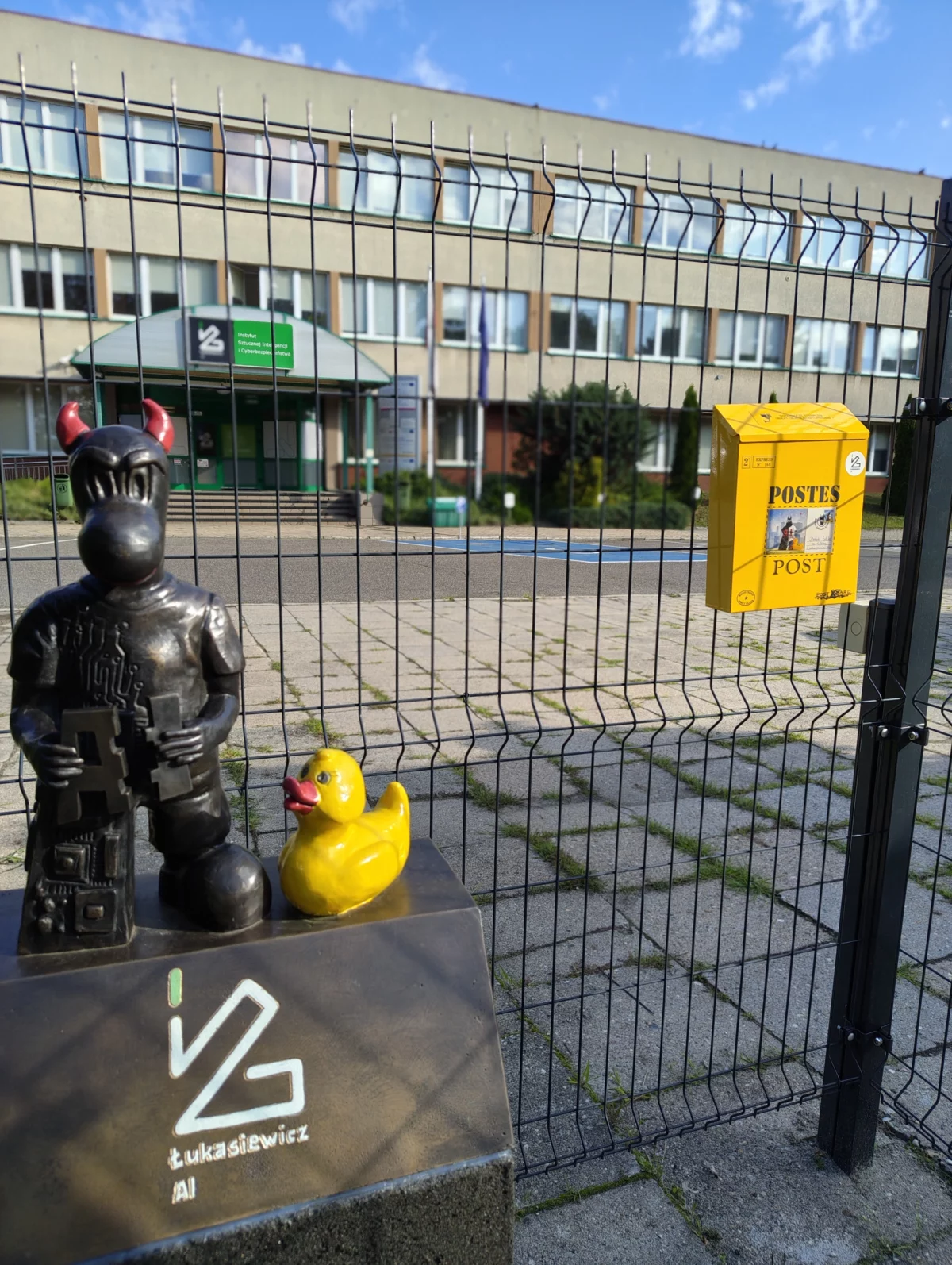
The Katowice Bebok Trail has been encouraging residents and visitors to explore the city from a unique perspective for years. One of its stops is BAItel – a friendly bebok who has found his home in front of the headquarters of the Łukasiewicz Research Network – Institute of Artificial Intelligence and Cybersecurity. He is accompanied by ŁAIka, a cheerful duck who welcomes visitors together with him.

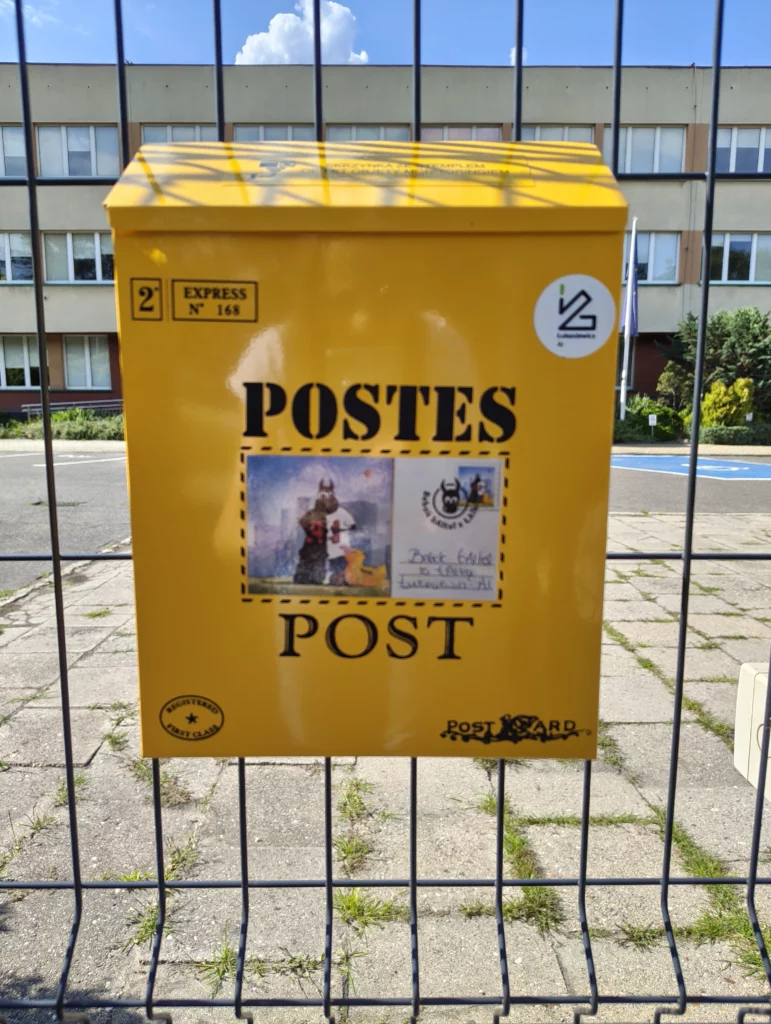
To make it easier for participants of the Katowice Bebok Trail to collect a commemorative stamp, a decorative yellow box has been placed next to BAItel. Inside, visitors can find a stamp that can be used to mark their Bebok Trail booklet at any time of day or night.

Yellow mailbox

Thanks to this solution, everyone visiting BAItel and ŁAIka can easily add this stop to their Bebok adventure and continue discovering other unique places on the map of Katowice.

We invite you to visit BAItel and ŁAIka while exploring the Katowice Bebok Trail. May this small bebok adventure become one of the memorable highlights of your journey through our city.

Categories
Events News

Łukasiewicz – AI and GZM Join Forces to Advance Modern Local Government

Artificial intelligence and cybersecurity are playing an increasingly important role in shaping the way public administration operates. To effectively address the challenges of digital transformation, the Łukasiewicz – AI and the Upper Silesian-Zagłębie Metropolis (GZM) have signed a Letter of Intent on research and development cooperation.

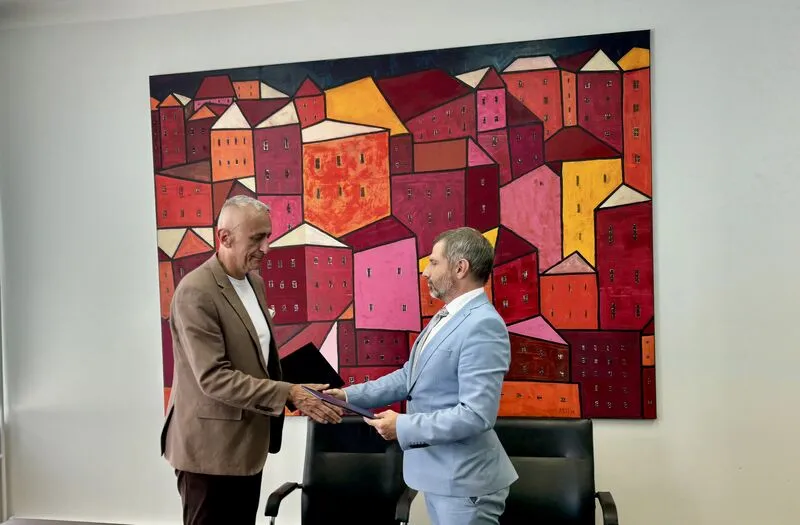
The Letter of Intent was signed by Jan Kozak, Director of the Łukasiewicz – AI, and Leszek Pietraszek, Chair of the GZM Management Board. The agreement formalizes cooperation focused on the development and implementation of advanced technologies supporting the operations of local government authorities.

The partnership will focus on leveraging the potential of artificial intelligence in administrative processes, strengthening the digital resilience of local governments, and enhancing the competencies of public administration employees in the field of emerging technologies. An important element of the cooperation will also be the development of recommendations and best practices for the application of AI and cybersecurity across the public sector.

The signed Letter of Intent establishes a framework for future joint initiatives aimed at supporting local governments in the secure and effective adoption of modern technologies.

Categories
Events News

Łukasiewicz – AI on YouTube – projects, seminars and publications available online

The Łukasiewicz – AI YouTube channel is a place where we share materials related to projects carried out by the Institute, seminars we organise, and our ongoing activities.

In July, the channel celebrates its first year of operation under the name Łukasiewicz – AI. During this time, it has become a space where published content remains available beyond the end of events and projects, allowing viewers to return to selected materials whenever it is convenient for them.

One of the key areas featured on the channel is the Accessible Book project. As part of this initiative, we publish books in Polish Sign Language (PJM), increasing access to literature for Deaf people. The prepared materials can also serve as a valuable resource for anyone interested in PJM and accessibility-related topics.

The channel also features recordings of seminars organised by Łukasiewicz – AI. This allows people interested in the topics discussed to access the materials after the events have concluded, while participants can revisit selected presentations at any time.

The channel also includes our first audiobook – another form of publication that enables us to share valuable content with a wider audience.

On YouTube, we have also published a video presenting Łukasiewicz – AI following our name change. It provides a brief introduction to the Institute’s activities and the areas in which we operate.

Further publications are already being prepared. The first year of the channel’s operation has shown that YouTube can be an effective platform for making the results of our work and projects more widely available. In the coming months, we plan to further develop the channel by adding new materials related to our initiatives, events and publications.

We invite you to visit the Łukasiewicz – AI YouTube channel:
https://www.youtube.com/@LukasiewiczAI

Categories
Events News

AI for cities, cybersecurity and innovation. June 2026 at Łukasiewicz – AI

June at Łukasiewicz – AI demonstrated that artificial intelligence is becoming increasingly embedded in our everyday lives – from education and medicine, through industry and cybersecurity, to the way cities operate. During one month, we met with residents, researchers, students, entrepreneurs and representatives of public administration, pursuing a common goal – developing modern technologies that address real societal needs.

It was a month full of events, new partnerships and discussions about the future. We started locally and concluded with international cooperation and projects that may shape the future development of artificial intelligence both in the region and beyond.

June began with a special guest – bAItel

On 1 June, during Children’s Day celebrations, we officially unveiled our bebok bAItel and his loyal companion – the duck ŁAIka. We invited more than 130 children from local kindergartens as well as children of Institute employees to join the celebrations.

The participants enjoyed animations, workshops, inflatable attractions, a foam party, a photo booth and many other activities. However, the highlight of the day was the unveiling of a new resident of Katowice, who has now permanently joined the Katowice Beboks Trail. This symbolic combination of Silesian tradition and modern technologies perfectly reflects the character of our Institute – a place where innovation is developed close to people.

When creativity meets artificial intelligence

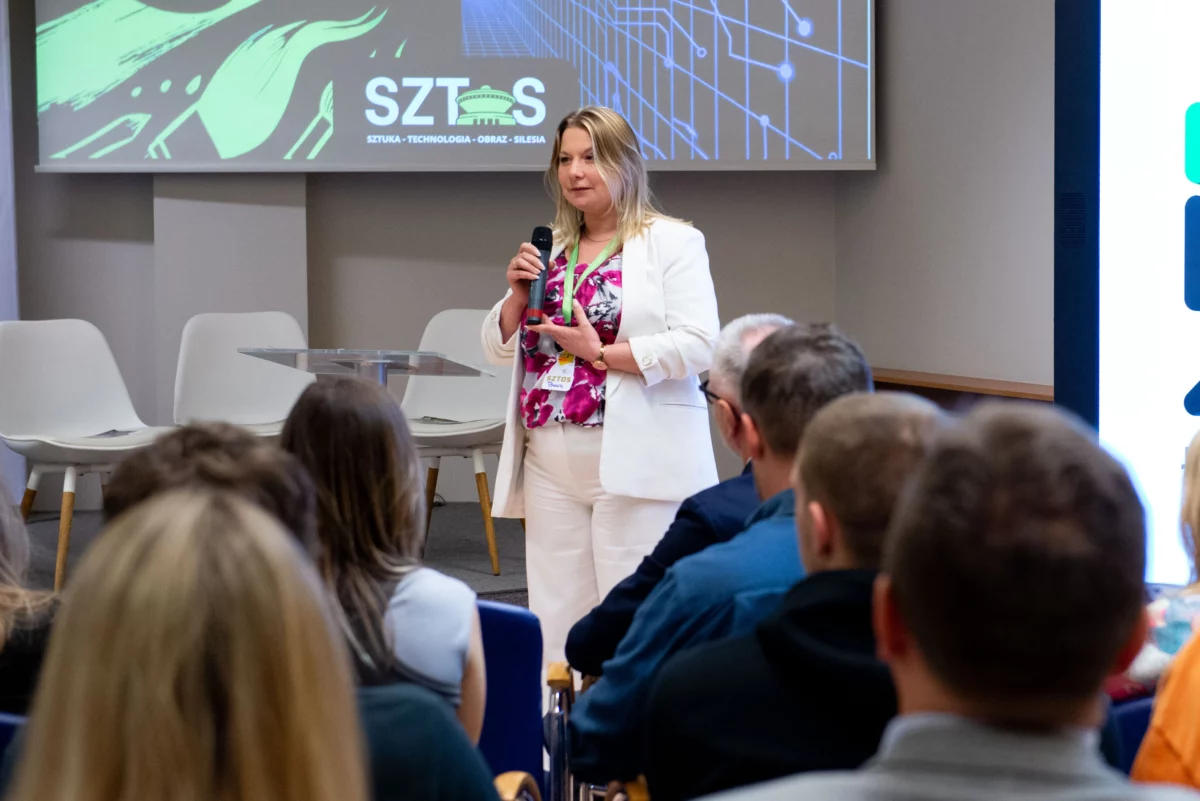
Just a few days later, on 11 June, our headquarters became a space for creative collaboration during the SZTOS Creative Sprint, organised as part of the New European Bauhaus initiative.

Can AI become a partner in the creative process? Where is the boundary between technology and human responsibility? These were the questions explored by participants during lectures, discussions and intensive teamwork.

The speakers included Jarosław Makowski, Patrycja Rudnicka and Karol Jędrasiak. The programme also featured a technology-focused Kahoot, creative challenges and final project presentations evaluated by a jury. The Sprint demonstrated that artificial intelligence does not replace creativity – it helps to develop it further.

June focused on knowledge sharing and science communication

In the middle of the month, we continued our educational activities by sharing expertise in artificial intelligence and data analysis

During a lecture at the Silesian University of Technology, Prof. Marek Sikora presented how machine learning algorithms, once used in mining, are now applied in modern medicine and personalised treatment.

We also published another scientific seminar on our YouTube channel, dedicated to medical data analysis in electrocardiology and haematology. In this way, we show that the development of AI is not only about creating new tools, but also about sharing knowledge and building the competences of future specialists.

Cybersecurity – a topic present throughout the entire month

Cybersecurity remains one of the key areas of our activity. In June, we participated in numerous events demonstrating how artificial intelligence can support the protection of digital infrastructure.

During CYBERSEC EXPO & FORUM 2026, Jan Kozak took part in a panel discussion devoted to future technologies and digital security, while Monika Ingram discussed cyber resilience of the state and local governments as well as challenges related to implementing the NIS2 Directive.

At the same time, we invited experts from across Europe to the webinar “Intelligent Mapping of CTI to MITRE ATT&CK: Automating TTP Classification with AI”, organised jointly with EclecticIQ. The meeting focused on the use of artificial intelligence for automated cyber threat intelligence analysis and data classification according to the international MITRE ATT&CK standard.

We also continued activities dedicated to local governments. During a meeting in Orzesze, we discussed with representatives of cities and municipalities SOC services, CUBE solutions and opportunities to strengthen the resilience of IT infrastructure.

At the end of the month, our employees also participated in a business meeting focused on real-world cyberattack scenarios, social engineering techniques and fraud-related threats. The exchange of experience with public administration and business partners helps us create solutions that respond to actual market needs.

AI supporting industry and the development of smart cities

June was also a time of intensive cooperation with industry and local governments. During Innovator Day 2026, we presented solutions developed at Łukasiewicz – AI among the most innovative projects in the region. A few days later, the Institute’s Director participated in the Digi Industry MOMENTUM conference organised by Siemens, where discussions focused on the future of smart factories, the role of engineers and the security of modern industry.

A special place in June’s calendar was occupied by cooperation with the Metropolitan Association of Upper Silesia and the Dąbrowa Basin (GZM). First, we invited city representatives to discuss opportunities for using artificial intelligence in public administration. The discussion focused on digital services for residents, automation of administrative processes, intelligent transport and improving the accessibility of public services.

At the end of the month, the “Challenges of GZM Cities – AI Ready” workshops took place. Together with representatives of local governments, universities and organisations, we worked on practical ideas for using AI in the 41 municipalities forming the Metropolitan Association of Upper Silesia and the Dąbrowa Basin. This is an example of how science and administration can jointly create solutions responding to the everyday needs of residents.

June ended with another important step in international cooperation

On 23 June, representatives of the Łukasiewicz Research Network met with experts from the World Bank, launching the implementation of a Memorandum of Understanding concerning analytical and research cooperation. The discussions focused on digital development, innovation and long-term technological trends. This marks an important step towards building international partnerships and jointly developing AI-based analytical tools.

June full of cooperation, knowledge and new challenges

From the family Children’s Day celebration and the unveiling of bAItel, through creative events, scientific conferences and expert discussions, to cooperation with local governments, industry and the World Bank – June was a month in which we consistently pursued our mission.
We create solutions in the fields of artificial intelligence and cybersecurity, develop cooperation with national and international partners, and demonstrate that emerging technologies can provide real support for public administration, business, science and residents.
Each June event represented another step towards building a modern innovation ecosystem with Łukasiewicz – AI at its centre.
Categories
Events News

ZamigAI o AI – When Technological Development Creates a New Language

Every breakthrough technology brings not only new opportunities but also a new vocabulary.

Just a few years ago, terms such as chatbot, prompt, or language model were rarely used outside specialist circles. Today, they are increasingly common in the media, the workplace, and everyday conversations. This is a natural process – every emerging technology introduces new concepts that become part of our daily lives.

A similar transformation took place with the development of the internet. Terms such as smartphone, podcast, streaming, and cloud computing have become widely recognized and commonly used. As our reality changes, so does the language we use to describe it.

The development of artificial intelligence has accelerated this process significantly. More and more people want to understand concepts such as AI models, generative artificial intelligence, and machine learning. However, to discuss these topics effectively, we need a language that enables us to describe them accurately and clearly.

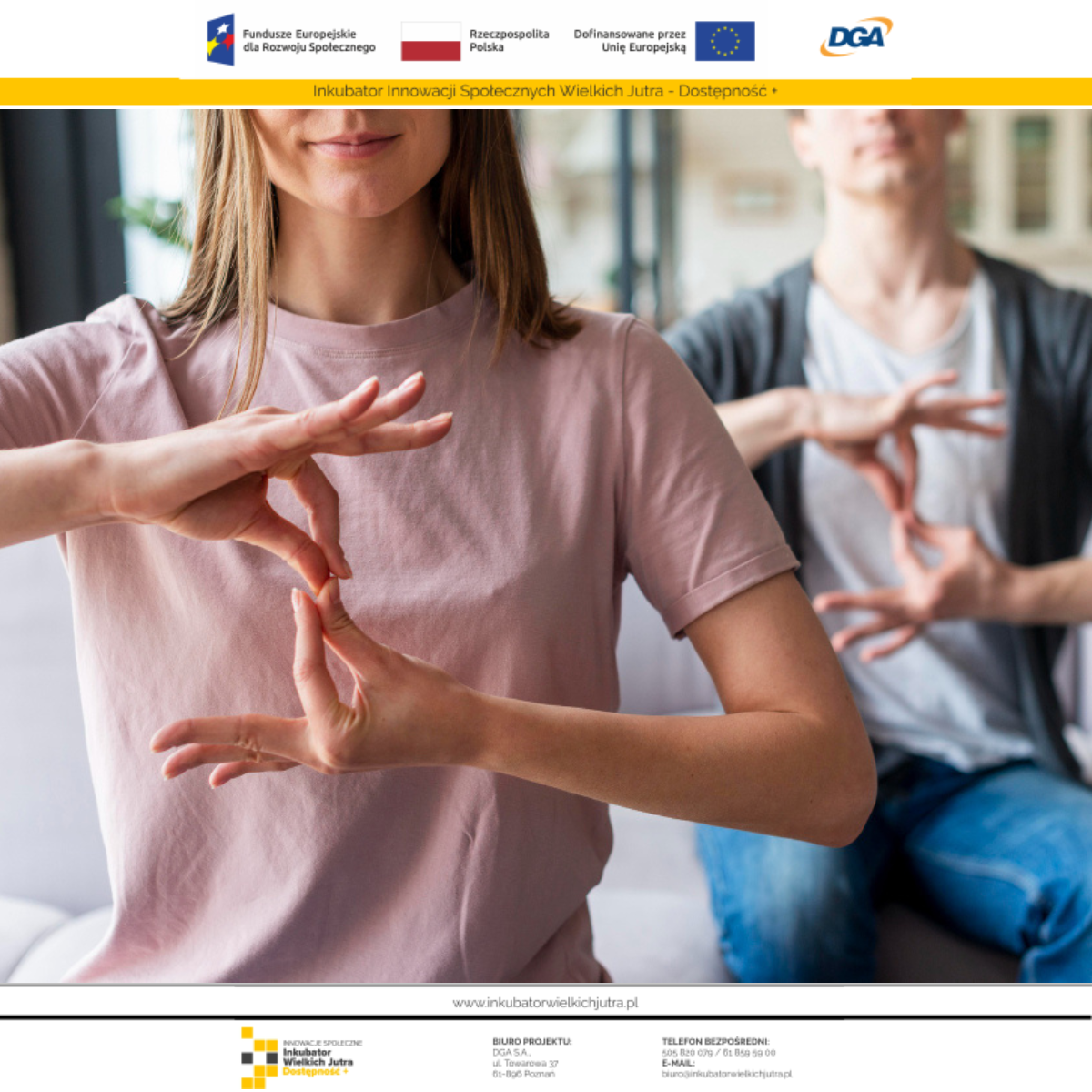
This also applies to Polish Sign Language (PJM). As new technologies emerge, there is a growing need to develop terminology that enables people who are Deaf and use PJM to communicate concepts related to artificial intelligence.

ZamigAI o AI – Artificial Intelligence Terminology in Polish Sign Language

The “ZamigAI o AI” project was created in response to the need to improve access to artificial intelligence for Deaf people who use Polish Sign Language. The project, implemented by Łukasiewicz AI, started in February 2026 and will continue until 29 May 2027.

The main objective of the project is to increase accessibility to artificial intelligence for Deaf people who use Polish Sign Language (PJM). This goal will be achieved through the development of PJM terminology related to artificial intelligence, as well as the preparation of educational materials and training courses in PJM.

The project activities include:

  • identifying terminology related to artificial intelligence;
  • consulting experts in the fields of AI and Polish Sign Language;
  • developing and making available a set of PJM signs related to AI;
    preparing an AI terminology dictionary;
  • developing a methodology and training scenario on artificial intelligence for Deaf people;
  • preparing AI tutorials in PJM using the developed set of signs.
  • A common language for emerging technologies

Artificial intelligence is developing rapidly, bringing with it new concepts that help us describe the changing world. Developing AI-related terminology in Polish Sign Language is an important part of the process of improving access to knowledge about new technologies.

The “ZamigAI o AI” project focuses on developing tools and materials that will help make artificial intelligence concepts more accessible to people who use PJM.

Technological development is not only about new solutions, but also about new ways of communication. To be able to discuss the future, we need a language that allows us to describe it.

Categories
News Successes

The Year of Łukasiewicz – AI. From a Name Change to Real Impact on the Development of Artificial Intelligence

At the beginning of July 2025, we started a new chapter in our history. At that time, the Institute changed its name to Łukasiewicz Research Network – Institute of Artificial Intelligence and Cybersecurity (Łukasiewicz – AI). It was not merely a change of identity. It was a declaration of the direction in which we want to develop Polish science and technology.

One year has passed. Today, we can say that it has been a time of intensive work, new projects, and cooperation with business, public administration, and the scientific community. Each of these activities brings us closer to our goal – creating secure, responsible, and practical solutions based on artificial intelligence.

Over the past twelve months, our experts have participated in numerous conferences, seminars, and industry events, sharing knowledge about artificial intelligence, cybersecurity, and digital transformation. We have developed research and development projects, supported companies in implementing modern technologies, and carried out initiatives of national and international importance.

It has also been a year of projects demonstrating that artificial intelligence can address real needs of people and the economy. We have developed solutions that strengthen the cyber resilience of organisations, technologies supporting digital accessibility, and tools for industry, medicine, and public administration. We have also continued our efforts to build trust in AI and promote knowledge about the safe use of emerging technologies.

The name change marked the beginning of a new identity, but our values have remained unchanged. We continue to combine scientific expertise with practical experience, creating solutions that go beyond laboratories – solutions applied in businesses, public institutions, and everyday life.

New challenges and ambitious projects lie ahead. We believe that the future of artificial intelligence should be built on security, responsibility, and cooperation. Therefore, we will continue to develop technologies that support people and strengthen the competitiveness of the Polish economy.

We would like to thank all our partners, clients, and colleagues for this first year of our shared journey as Łukasiewicz – AI. This is only the beginning.

Categories
Events News

SZTOS Creative Sprint to Be Held in Katowice Soon


On 11 June 2026, the SZTOS Creative Sprint will take place in Katowice at the headquarters of Łukasiewicz – AI. The event is organized by Łukasiewicz – AI as part of the European New European Bauhaus (NEB) Festival.

The SZTOS Creative Sprint is dedicated to the intersection of art, technology, and artificial intelligence. The programme includes team-based challenge activities, expert talks, and discussions covering topics such as generative AI, the ethics of AI use in art and media, threats related to deepfakes, and the environmental costs of technology.

The event is organized in cooperation with partners representing various scientific and academic communities, including the National Institute of Telecommunications – National Research Institute, Silesian University of Technology, University of Economics in Katowice, Krzysztof Kieślowski Film School at the University of Silesia, WSB University, and Silesian Academy. The involvement of these partners enables a multidisciplinary perspective on artificial intelligence — spanning art and design, media and education, as well as research and business applications.

Team registration is open until 15 May 2026.
The registration form is available at:
https://forms.office.com/e/Et72nuFbue

Categories
Events News

Supporting physicians in creating medical documentation

Medical documentation today takes up a significant portion of physicians’ working time, which directly affects the organization of appointments and the way patient care is delivered.

At Łukasiewicz – AI, we are working on a solution aimed at supporting physicians in creating medical documentation while maintaining full control over the content and responsibility on the part of medical staff. The project focuses on real clinical needs and on improving work organization in healthcare facilities.

Responding to real needs of the healthcare system
The process of documenting a medical visit is an essential element of patient care; however, in practice it is one of the most time-consuming and administratively burdensome tasks. In the dynamic conditions of clinical work, physicians often need to conduct a conversation with the patient and simultaneously update IT systems, which affects both working comfort and the course of the visit.

The solution developed at Łukasiewicz – AI aims to organize and streamline this process so that documentation is created in a more efficient, consistent, and clinically aligned manner, without excessive administrative burden on physicians.

Comprehensive support for the documentation process
The designed solution goes beyond simple transcription of the physician–patient conversation. Its goal is to support the entire medical documentation process—from collecting information to preparing a structured preliminary visit summary.
The developing functionalities include, among others:

  • handling multi-speaker conversations and generating preliminary visit summaries in real time,
  • recognizing key medical information such as symptoms, diagnoses, or medications used,
  • verifying pharmaceutical names using an integrated pharmacological database,
  • intelligent content completion mechanisms in cases where statements are incomplete or unclear,
  • support for creating documentation consistent with the structure of a medical summary (epikryza).

A key aspect of the project is that the system does not make medical decisions. The physician remains the final author of the documentation, with the ability to edit, correct, and approve the content in line with their own experience and clinical judgment.

Adaptation to language and clinical practice in Poland
The solution is being developed based on Polish medical data and with the realities of local healthcare institutions in mind. It takes into account both specialized terminology and the natural, often informal way in which conversations with patients are conducted.
As part of the project, work is also underway to adapt the system to regional linguistic variations, which is expected to increase its usefulness in everyday clinical practice across different parts of the country.

Safety and regulatory compliance
Data security is one of the key aspects of the project. The developed solution operates in an offline model, meaning that patient data is not transmitted outside the institution’s infrastructure.

Communication between system components is protected by advanced encryption mechanisms. This approach aligns with current and upcoming regulations, including those related to the European Health Data Space (EHDS), as well as the high requirements of medical institutions regarding the protection of sensitive information.

Testing with medical professionals
The solution is currently being tested in cooperation with physicians at the Dr. Stanisław Sakiel Burn Treatment Centre in Siemianowice Śląskie (Centrum Leczenia Oparzeń im. dr. Stansisława Sakielra). Clinical testing allows the functionality of the system to be verified in a real working environment and incorporates feedback and needs from future users.

In parallel, work is underway on a solution designed for documenting hospital rounds, which is intended to further improve the organization of medical staff work in healthcare facilities.

Media and industry interest
The work carried out at Łukasiewicz – AI has attracted interest from regional and industry media, showing that the topic of supporting physicians in creating medical documentation is one of the key challenges of modern healthcare systems.

Information about the ongoing work and tests of the developed solution can be found at:
pulsmedycyny.pl
myszkow365.pl
niepelnosprawni.pl
Polityka zdrowotna

Categories
Events News

OSCRAT – Supporting European SMEs in Enhancing Cyber Resilience


Łukasiewicz – AI: Expertise in Cybersecurity and Artificial Intelligence

The Łukasiewicz Research Network – Institute of Artificial Intelligence and Cybersecurity (Łukasiewicz – AI) conducts projects with a real impact on digital security. We carry out research, develop tools, and support businesses in increasing their resilience to cyber threats. Our activities help make products and systems across Europe more secure and resistant to attacks.

The OSCRAT Project in Practice

Since 2024, Łukasiewicz – AI has been participating in the international OSCRAT project (Open-Source Cyber Resilience Act Tools), co-funded by the European Union under the Digital Europe Programme. The project aims to develop open, free tools to assist small and medium-sized enterprises (SMEs) in implementing the requirements of the Cyber Resilience Act (CRA) in practice.

The project focuses on increasing the real-world resilience of digital products throughout their entire lifecycle — from design and deployment to incident response.

Activities So Far

Throughout the project, the Łukasiewicz – AI team has presented the OSCRAT tool at numerous international conferences and meetings to gather feedback. A survey was also conducted among SMEs to collect opinions and needs, ensuring that the platform aligns with actual market challenges.
(See information about the OSCRAT survey)

What OSCRAT Offers

  • CRA Self-Assessment – interactive checklists, role and product category assignments, and reports supporting EU compliance declarations.
  • SBOM and Supply Chain Security – automatic and manual component lists with vulnerability analysis.
  • Vulnerability and Incident Management – policy creation, reporting to ENISA and CSIRT teams, improving response capabilities.
  • Centralized Documentation Repository – all reports, policies, certificates, and security patches in one location.
  • SME Support – ready-to-use tools and guidelines for quickly implementing cyber resilience principles without building solutions from scratch.

OSCRAT in the European Context

The project is aligned with the CRA, which defines digital product security requirements throughout their lifecycle. OSCRAT fits into the EU’s broader strategy to strengthen digital security and enhance enterprise resilience against cyber threats.

Collaboration and Consultations

OSCRAT is implemented by an international consortium: PMF Research (Italy), Oves Enterprise and ENERSEC (Romania), EDIH Trakia (Bulgaria), Unicis.Tech OÜ (Estonia), and Łukasiewicz – AI (Poland).

Consultations and surveys of SMEs, experts, and business support centers ensure the tools are tailored to real market needs.

Role of Łukasiewicz – AI

As the leader of the WP2 Requirements Gathering and Analysis work package, Łukasiewicz – AI defines the scope and requirements for OSCRAT tools, develops interaction models, the graphical user interface, and cybersecurity specifications.

Summary

OSCRAT provides practical, open support for European SMEs in enhancing the cyber resilience of digital products and preparing for CRA requirements. The platform enables enterprises to efficiently implement digital security principles in their daily operations.

Categories
Events News

New Year, New Energy – Łukasiewicz – AI Seminar Series Kicks Off

We are excited to announce that the Łukasiewicz – AI scientific and doctoral seminar series is starting once again. This has become a regular feature of our activities, attracting growing interest year after year.

In the coming months, we will cover a wide range of topics. As in previous years, all sessions will be recorded and published on our official YouTube channel, ensuring open and free access to knowledge for everyone, regardless of location or time.

We warmly invite PhD students and early-career researchers, AI practitioners and enthusiasts, business representatives seeking inspiration, and anyone interested in staying up to date with the latest trends in artificial intelligence.

We are open to proposals for presentations, academic collaboration, and new ideas. If you are conducting research, running an interesting project, or want to share your experience, please contact us at: sekretariat@ai.lukasiewicz.gov.pl.

To stay updated and access all recordings, we encourage you to subscribe to our YouTube channel: https://www.youtube.com/@LukasiewiczAI
We look forward to welcoming everyone interested in the new seminar season!

This will close in 0 seconds