June at Łukasiewicz – AI demonstrated that artificial intelligence is becoming increasingly embedded in our everyday lives – from education and medicine, through industry and cybersecurity, to the way cities operate. During one month, we met with residents, researchers, students, entrepreneurs and representatives of public administration, pursuing a common goal – developing modern technologies that address real societal needs.
It was a month full of events, new partnerships and discussions about the future. We started locally and concluded with international cooperation and projects that may shape the future development of artificial intelligence both in the region and beyond.
June began with a special guest – bAItel
On 1 June, during Children’s Day celebrations, we officially unveiled our bebok bAItel and his loyal companion – the duck ŁAIka. We invited more than 130 children from local kindergartens as well as children of Institute employees to join the celebrations.
The participants enjoyed animations, workshops, inflatable attractions, a foam party, a photo booth and many other activities. However, the highlight of the day was the unveiling of a new resident of Katowice, who has now permanently joined the Katowice Beboks Trail. This symbolic combination of Silesian tradition and modern technologies perfectly reflects the character of our Institute – a place where innovation is developed close to people.
When creativity meets artificial intelligence
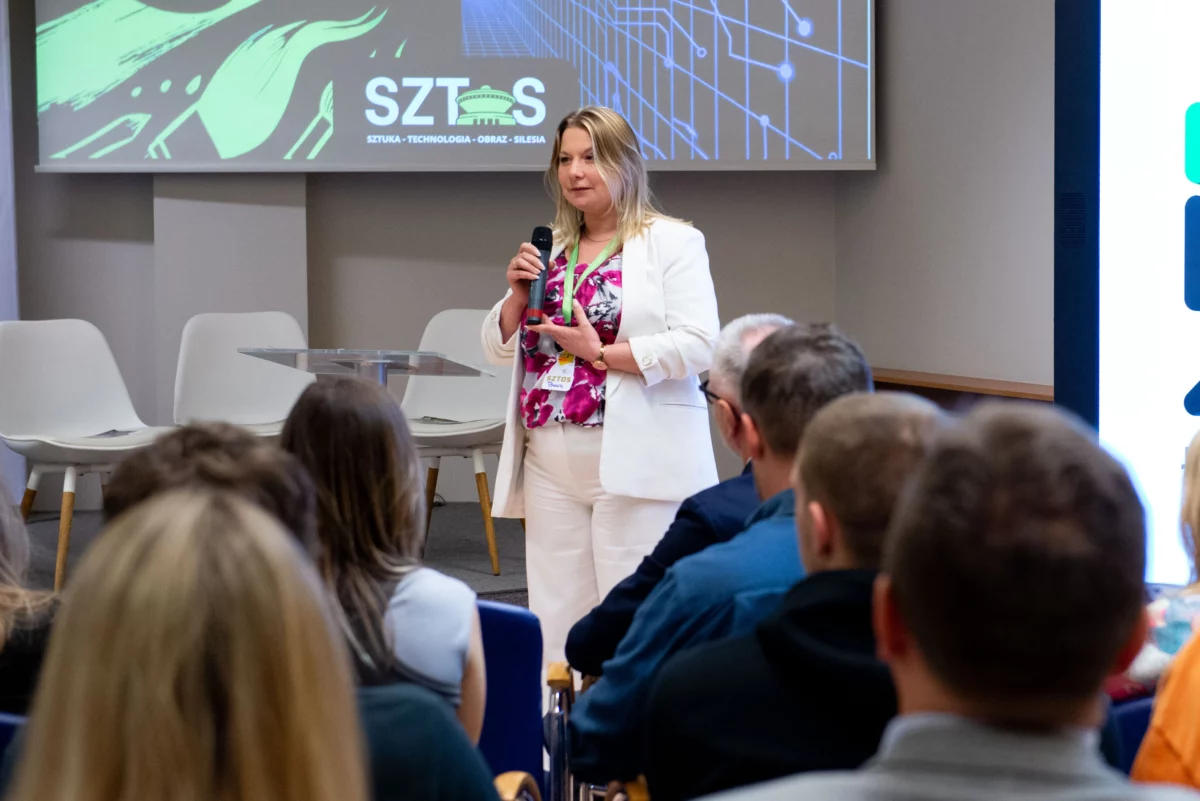
Just a few days later, on 11 June, our headquarters became a space for creative collaboration during the SZTOS Creative Sprint, organised as part of the New European Bauhaus initiative.
Can AI become a partner in the creative process? Where is the boundary between technology and human responsibility? These were the questions explored by participants during lectures, discussions and intensive teamwork.
The speakers included Jarosław Makowski, Patrycja Rudnicka and Karol Jędrasiak. The programme also featured a technology-focused Kahoot, creative challenges and final project presentations evaluated by a jury. The Sprint demonstrated that artificial intelligence does not replace creativity – it helps to develop it further.
June focused on knowledge sharing and science communication
In the middle of the month, we continued our educational activities by sharing expertise in artificial intelligence and data analysis
During a lecture at the Silesian University of Technology, Prof. Marek Sikora presented how machine learning algorithms, once used in mining, are now applied in modern medicine and personalised treatment.
We also published another scientific seminar on our YouTube channel, dedicated to medical data analysis in electrocardiology and haematology. In this way, we show that the development of AI is not only about creating new tools, but also about sharing knowledge and building the competences of future specialists.
Cybersecurity – a topic present throughout the entire month
Cybersecurity remains one of the key areas of our activity. In June, we participated in numerous events demonstrating how artificial intelligence can support the protection of digital infrastructure.
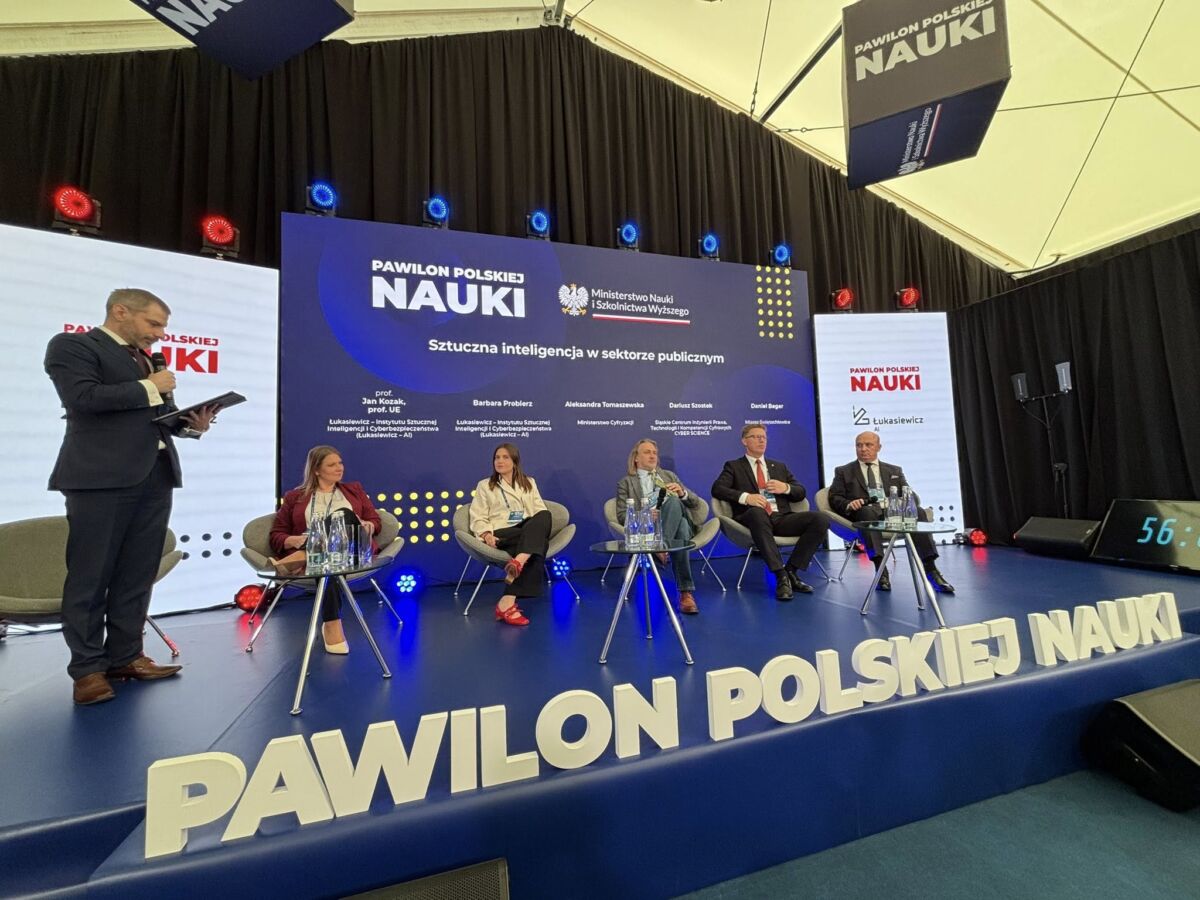
During CYBERSEC EXPO & FORUM 2026, Jan Kozak took part in a panel discussion devoted to future technologies and digital security, while Monika Ingram discussed cyber resilience of the state and local governments as well as challenges related to implementing the NIS2 Directive.
At the same time, we invited experts from across Europe to the webinar “Intelligent Mapping of CTI to MITRE ATT&CK: Automating TTP Classification with AI”, organised jointly with EclecticIQ. The meeting focused on the use of artificial intelligence for automated cyber threat intelligence analysis and data classification according to the international MITRE ATT&CK standard.
We also continued activities dedicated to local governments. During a meeting in Orzesze, we discussed with representatives of cities and municipalities SOC services, CUBE solutions and opportunities to strengthen the resilience of IT infrastructure.
At the end of the month, our employees also participated in a business meeting focused on real-world cyberattack scenarios, social engineering techniques and fraud-related threats. The exchange of experience with public administration and business partners helps us create solutions that respond to actual market needs.
AI supporting industry and the development of smart cities
June was also a time of intensive cooperation with industry and local governments. During Innovator Day 2026, we presented solutions developed at Łukasiewicz – AI among the most innovative projects in the region. A few days later, the Institute’s Director participated in the Digi Industry MOMENTUM conference organised by Siemens, where discussions focused on the future of smart factories, the role of engineers and the security of modern industry.
A special place in June’s calendar was occupied by cooperation with the Metropolitan Association of Upper Silesia and the Dąbrowa Basin (GZM). First, we invited city representatives to discuss opportunities for using artificial intelligence in public administration. The discussion focused on digital services for residents, automation of administrative processes, intelligent transport and improving the accessibility of public services.
At the end of the month, the “Challenges of GZM Cities – AI Ready” workshops took place. Together with representatives of local governments, universities and organisations, we worked on practical ideas for using AI in the 41 municipalities forming the Metropolitan Association of Upper Silesia and the Dąbrowa Basin. This is an example of how science and administration can jointly create solutions responding to the everyday needs of residents.
June ended with another important step in international cooperation
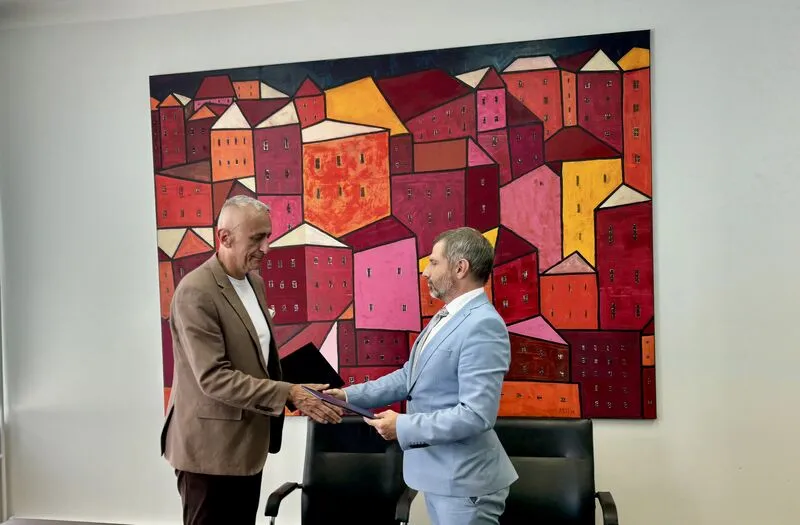
On 23 June, representatives of the Łukasiewicz Research Network met with experts from the World Bank, launching the implementation of a Memorandum of Understanding concerning analytical and research cooperation. The discussions focused on digital development, innovation and long-term technological trends. This marks an important step towards building international partnerships and jointly developing AI-based analytical tools.
June full of cooperation, knowledge and new challenges
From the family Children’s Day celebration and the unveiling of bAItel, through creative events, scientific conferences and expert discussions, to cooperation with local governments, industry and the World Bank – June was a month in which we consistently pursued our mission.
We create solutions in the fields of artificial intelligence and cybersecurity, develop cooperation with national and international partners, and demonstrate that emerging technologies can provide real support for public administration, business, science and residents.
Each June event represented another step towards building a modern innovation ecosystem with Łukasiewicz – AI at its centre.